
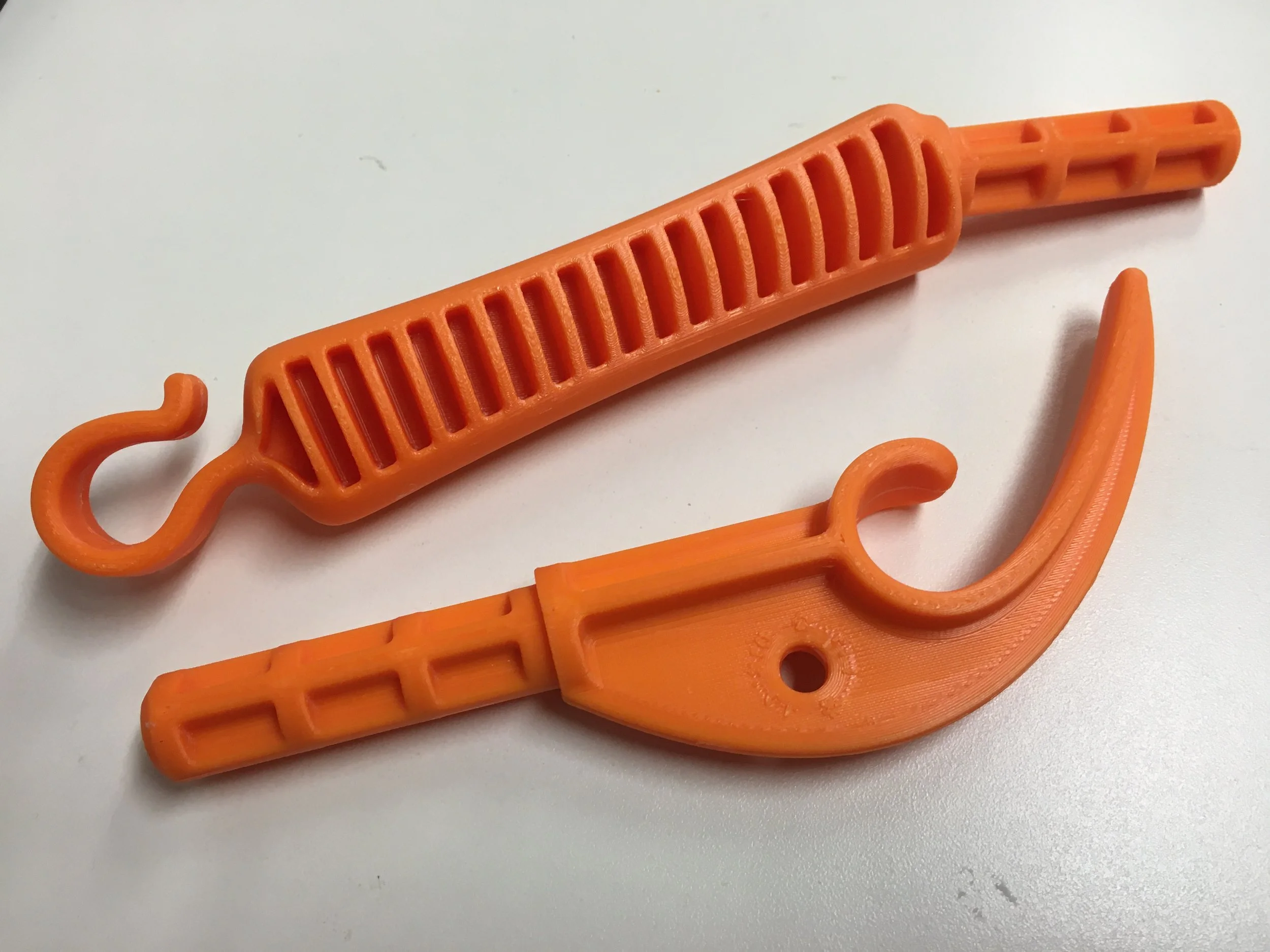
Prototyping is essential for verifying fit, function, ergonomics, material choice, and manufacturability. We may employ any combination of fabrication processes when building prototypes including 3D printing, molding & casting, laser cutting, and more. Post processes such as threading & tapping, heat-setting of hardware components, painting & finishing may come in to play. Prototypes sometimes will include hardware, electronics, or other off-the-shelf parts where required or spec’d. The objective is to achieve a functional part or device as close to a finished manufactured part as reasonably possible, quickly and within budget.
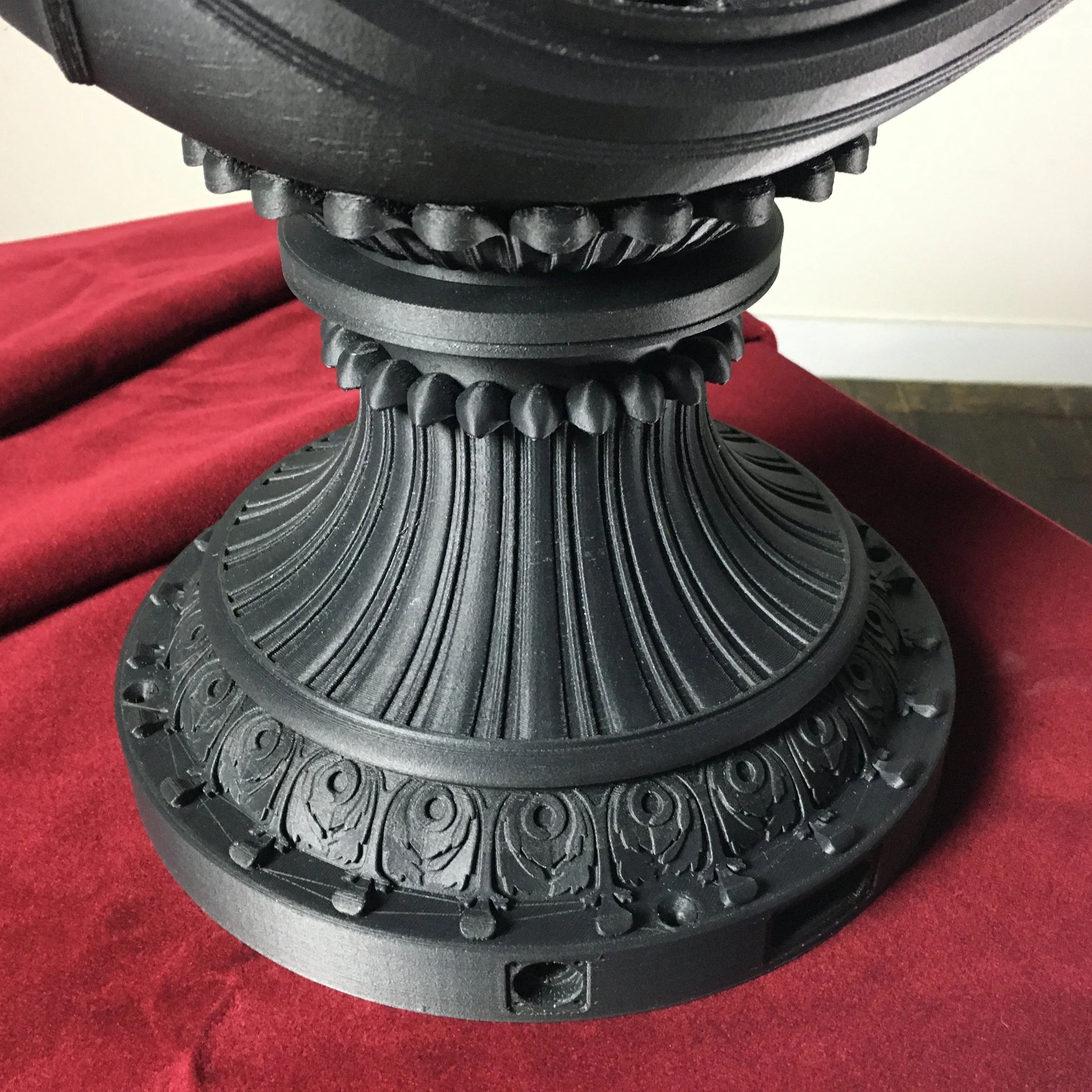
Steamfruit has over twenty 3D printers in-house with varying capabilities. For detailed parts or those with tight tolerances we typically rely on one of our HD SLA resin printers. Smooth mold-quality parts and features can be achieved with an increasingly functional and durable cast of materials.
Often FDM printing fits the bill. This is the more common filament-based printing process. The advantage is the shear breadth of materials and color choices. Whether it’s flexible TPU, or durable PETG, reliable ABS, carbon- or glass-filled materials for strength and durability, high heat tolerant PEEK or Ultim, or even wood-filled PLA, we can meet the material needs of most any project.
Additionally, with a select group of printing partners by our side, we can offer SLS, multi-jet fusion, or even metal 3D printing capabilities.
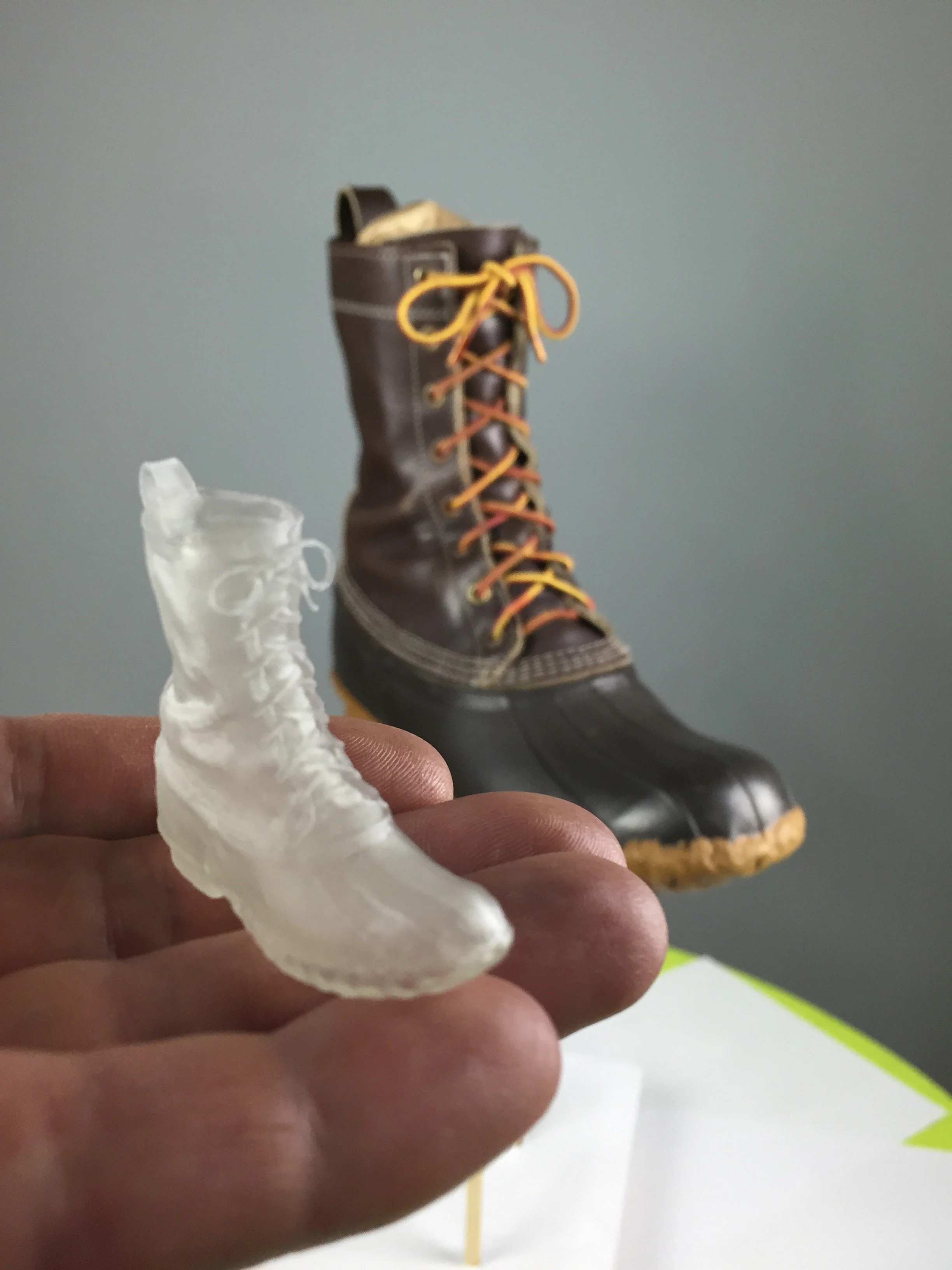
3d scanning is something akin to magic. It is an amazingly powerful tool for replicating out of production parts, reverse engineering, capturing sculptural detail, or scanning people or body parts.
We utilize four scanning techniques, each with its own advantages and capabilities:
Multi blue laser line and structured light scanning for parts where dimensional accuracy and details matter. The preferred processes for reverse engineering and faithful reproduction.
IR scanning for scans of larger objects or people. Capture organic contours and textures quickly and accurately.
Photogrammetry: a process by which many photographs of an object from various perspectives are stitched together and processed into a full color textured digital mesh. Great for complex parts, sculpture, organic forms. More time-consuming but can yield exceptional results in a controlled lighting environment.
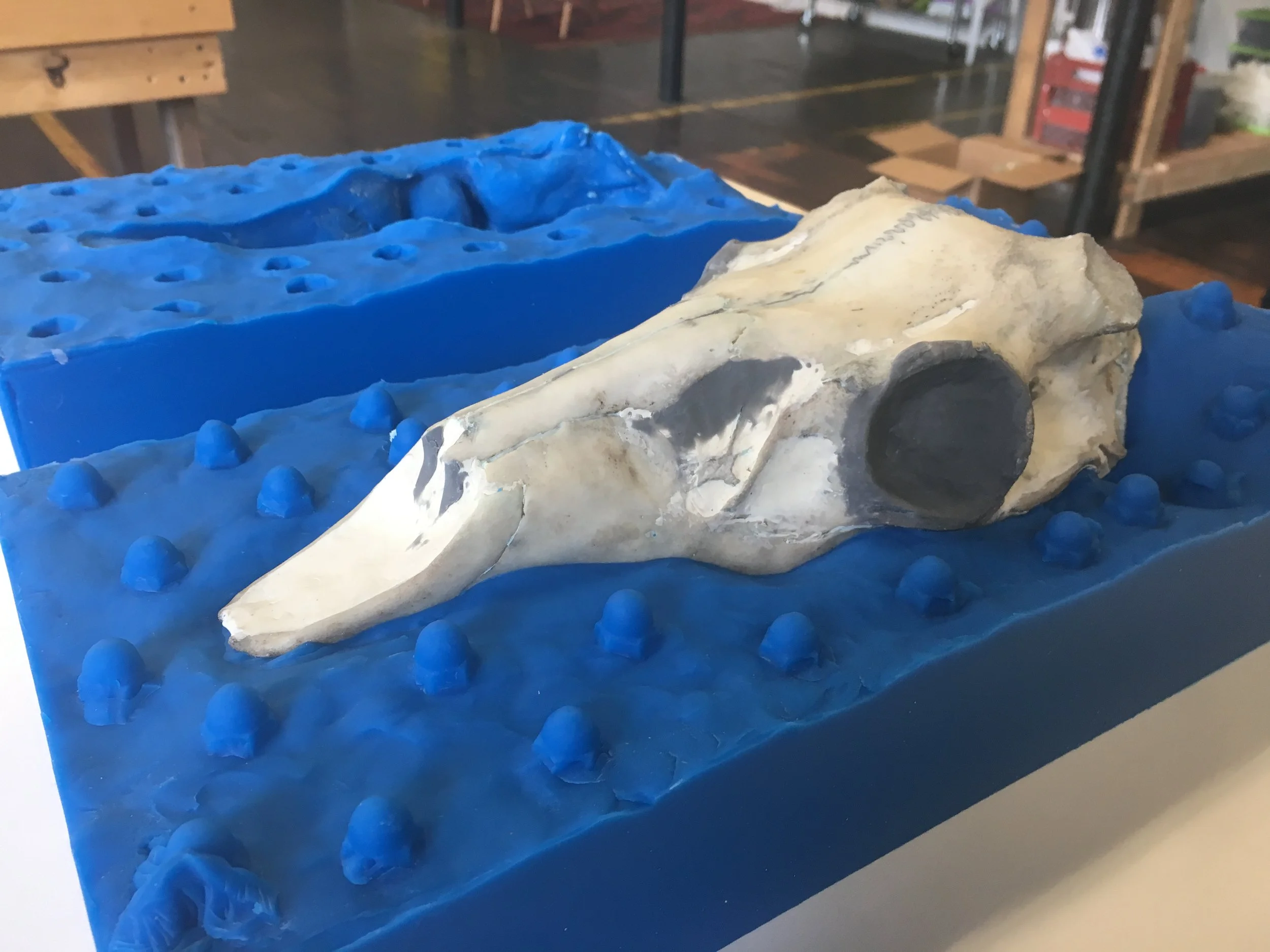
We offer molding and casting services especially geared toward part replication. Utilizing high quality silicones and urethanes we’ve reproduced light lenses for automobiles and railcars. We’ve even cast full scale whale vertebrae and shark jaws for interactive exhibits.
Concrete is great for pet grave markers and garden sculptures. Fine art sculpture casting benefits from detail-preserving Hydrostone.
Various in-process or post-casting techniques can add amazing finishes and effects; metalic, oxidized iron, patina, marblization to name a few.
Nothing beats silicones and flexible urethanes for prototyping elasto-machanical parts, gaskets, seals, grips, vibration dampeners, or anything else that requires flex or provides cushion.